
If you’re running a restaurant in Pune and looking to update your menu card, you’re in the right place. At Aveera Design Solutions, we specialise in menu-card design and printing services tailored to the local market. This blog will help you stay ahead of the curve by highlighting seven key menu-card types for 2025-26 — and show you how you can use them to stand out in Pune’s hospitality scene.
Why Menu-Card Design Matters in 2025-26
A menu card isn’t just a list of dishes. It’s your silent salesperson: the first thing your guest interacts with, sets the tone for their dining experience, and has the potential to influence how much they spend. As one design-blog puts it:
“Whenever a customer walks into your restaurant… it has to be your menu!” designerpeople
Likewise, industry trends for 2025 emphasise simplicity, digital integration and transparency. restroworks.com+2The Restaurant HQ+2
Here are some key take-aways that you can apply:
- Clear, readable layout – avoid clutter. Helps quicker decision-making. TouchBistro
- Reflect brand & ambience – your menu’s look and feel should match your restaurant’s identity (casual café vs. premium fine dining).
- Highlight high-margin items – strategic placement can help increase profits. TouchBistro
- Digital and physical synergy – even printed menus should consider QR codes, mobile, and online ordering. designerpeople+1
- Material & tactile quality matter – in-house dining is rising again, so the physical menu card experience counts. The Restaurant HQ
Now, let’s dive into seven menu-card types that are trending for 2025-26 — with pros, cons, design tips and how you can ask Aveera to implement them for your Pune restaurant.
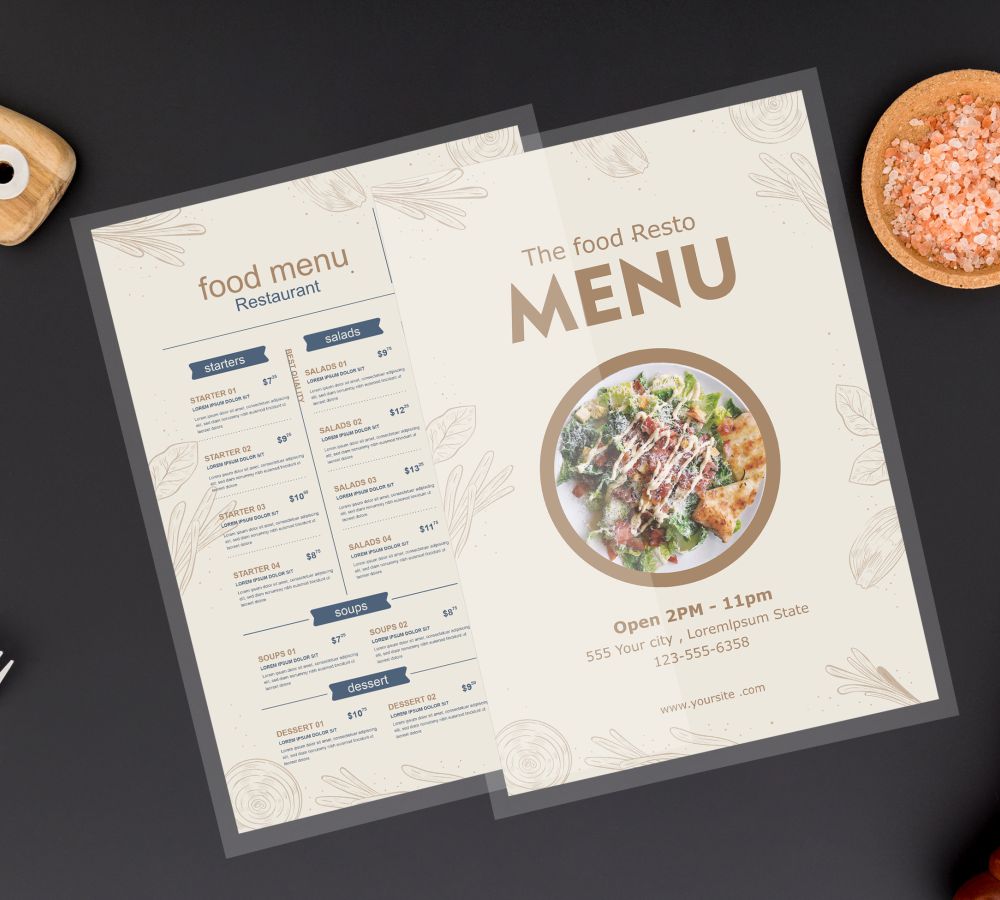
1. Laminated Paper Menu
6
What it is:
A traditional paper menu printed (often full-colour) and laminated for durability. Usually single or double sided, maybe multi-page, with a glossy or matte finish.
Why it’s still relevant:
- Cost-effective for small/medium restaurants, cafés or casual dining spots.
- Easy to update (print new pages, laminate again) when menu items change.
- Works well for high-turnover environments where menus are handled often.
- Aligns with the trend of keeping printed menus for on-premise diners. The Restaurant HQ+1
Design & implementation tips:
- Use a durable lamination (150–200 microns) to ensure longevity.
- Ensure good contrast, typography size (readable from table) and high-quality food imagery.
- Include your brand logo, colours, and consistent style with your décor.
- In Pune’s humid climate, ensure lamination resists moisture and frequent cleaning.
- Update menu versions every 6-12 months (unless seasonal changes) to keep it fresh.
When it’s a good pick:
- For cafés, fast-casual restaurants, street-style burger joints (like your client shop for example).
- When budget is moderate and menu changes are frequent.
- When you want quick turnaround and relatively low cost.
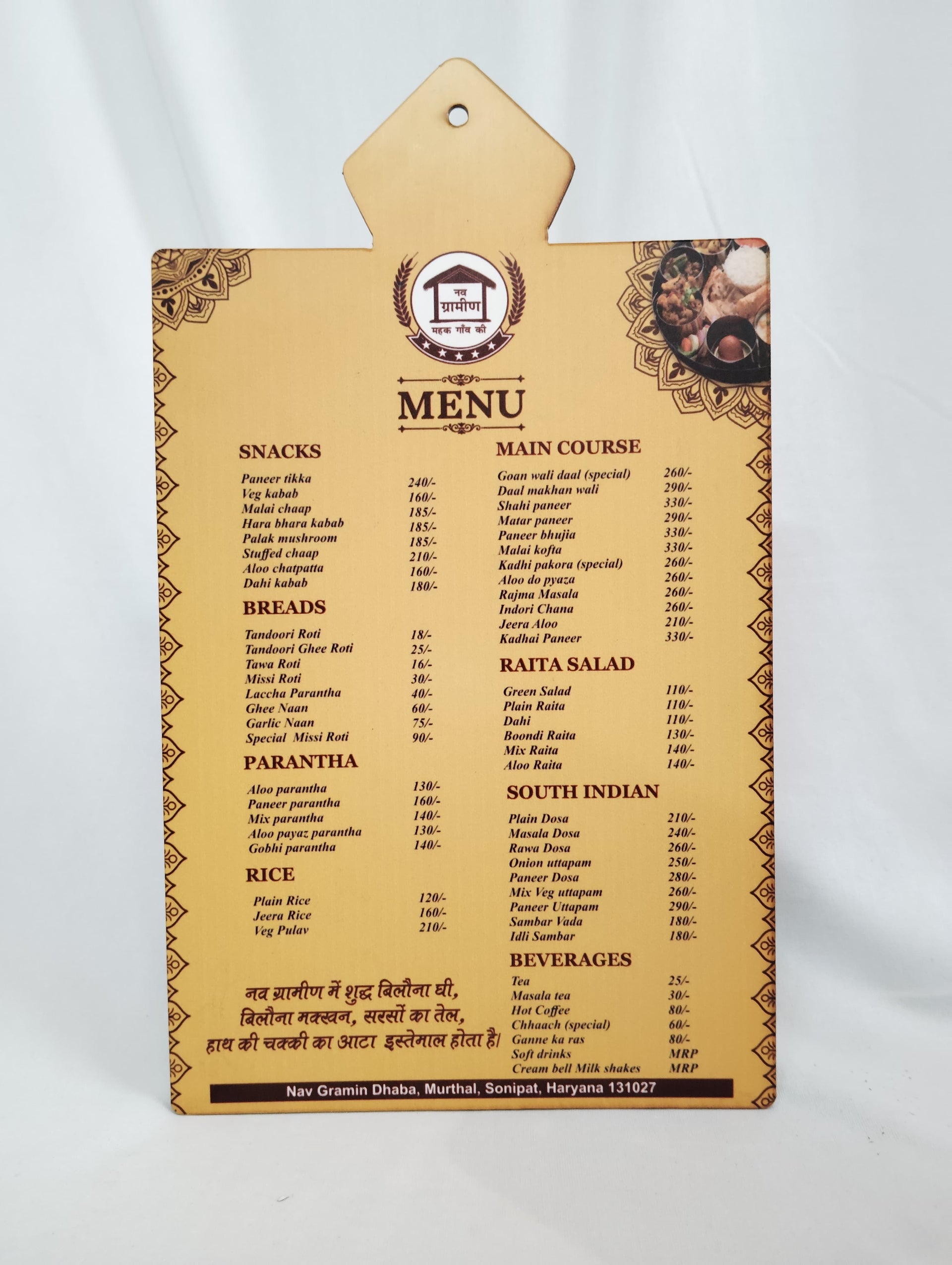
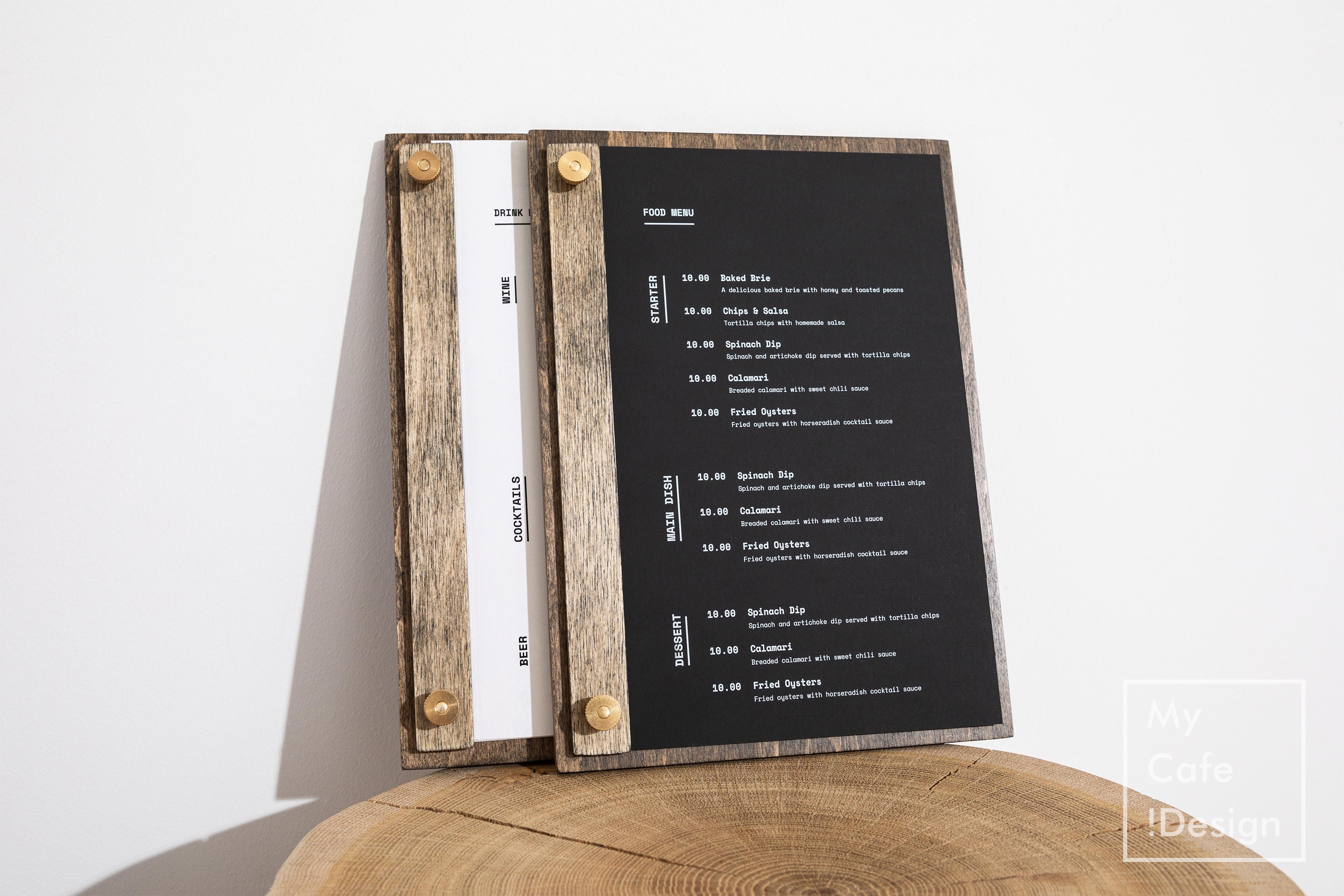
2. Hardboard / MDF Menu Card

6
What it is:
A rigid menu card made on MDF (medium-density fibreboard) or hardboard, sometimes with printed vinyl sheet or screen-printed surface. Sheet size might be a single board (one page) or hinged boards for multiple pages.
Why it’s trending:
- Adds a premium, tactile feel — conveys quality and durability.
- Works especially well for restaurants wanting a “rustic”, “wood-chic” or “industrial modern” aesthetic.
- Since dining in is picking up, physical menus that feel good to hold add to the experience.
- Stand-out material differentiator — guests remember it.
Design & implementation tips:
- Choose board thickness (e.g., 6 mm to 12 mm) depending on budget and handling.
- Surface finish: can have laminate, canvas wrap, printed overlay or engraved effect.
- If multi-page, hinge with metal binding or leather straps for durability.
- Ensure edges are sanded/fushed so there are no sharp bits.
- Consider wipeable surface (for cleaning) especially in India’s climate and hygiene expectations.
When to use it:
- For mid-to-higher end restaurants, fusion bistros, places with heavy dine-in traffic.
- When you want the menu to double as part of your interior aesthetic.
- If you have a stable menu (not changing every week) so initial investment pays off.
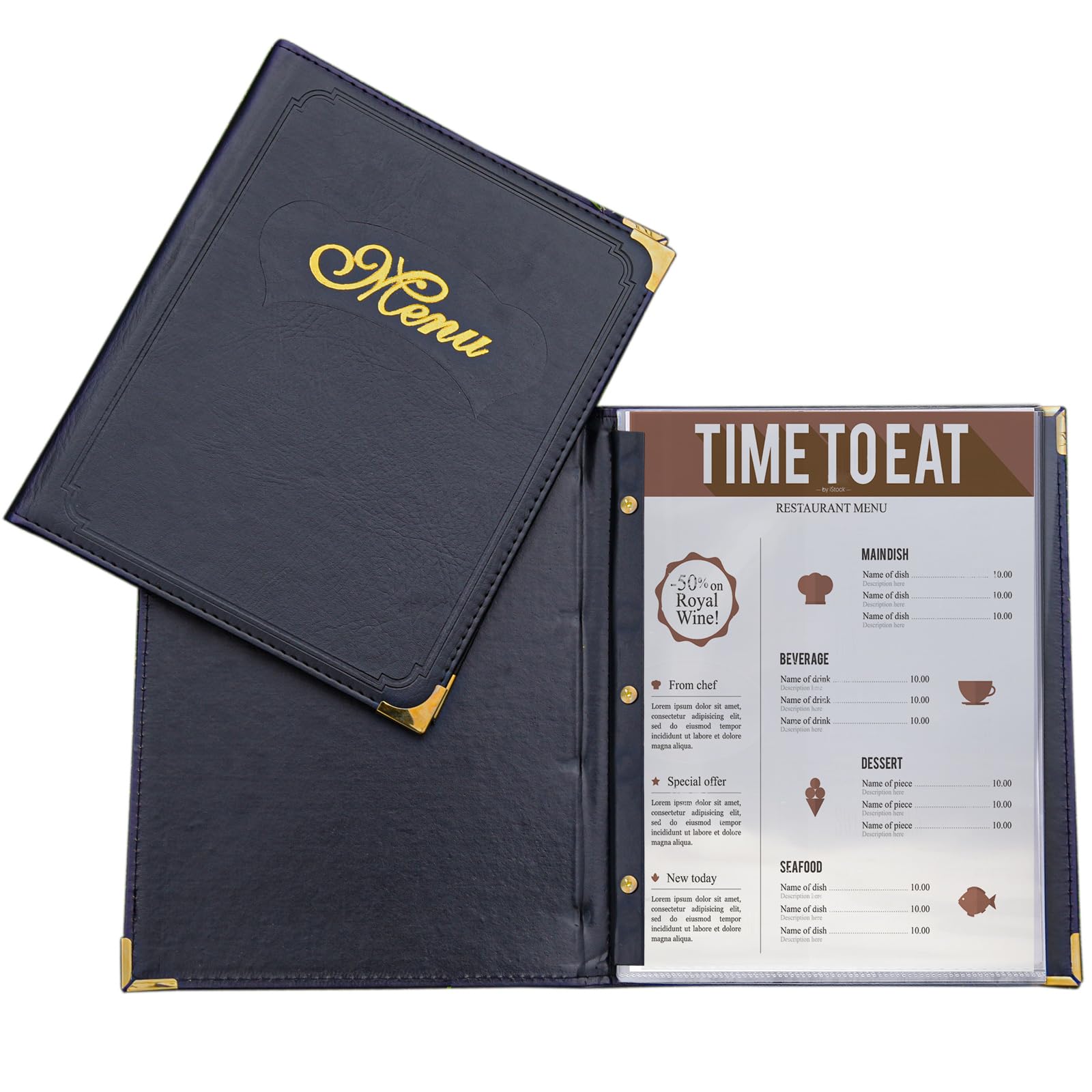
3. PU-Leather (Leather-Look) Holder Menu
6
What it is:
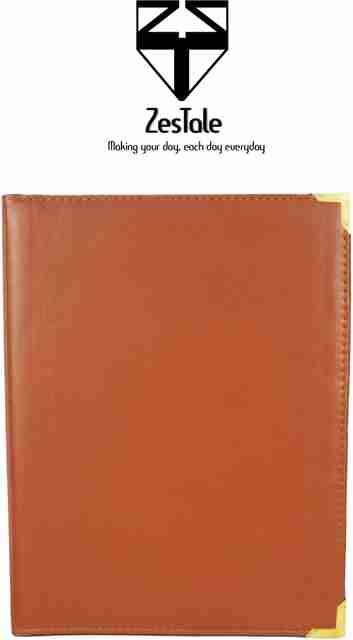
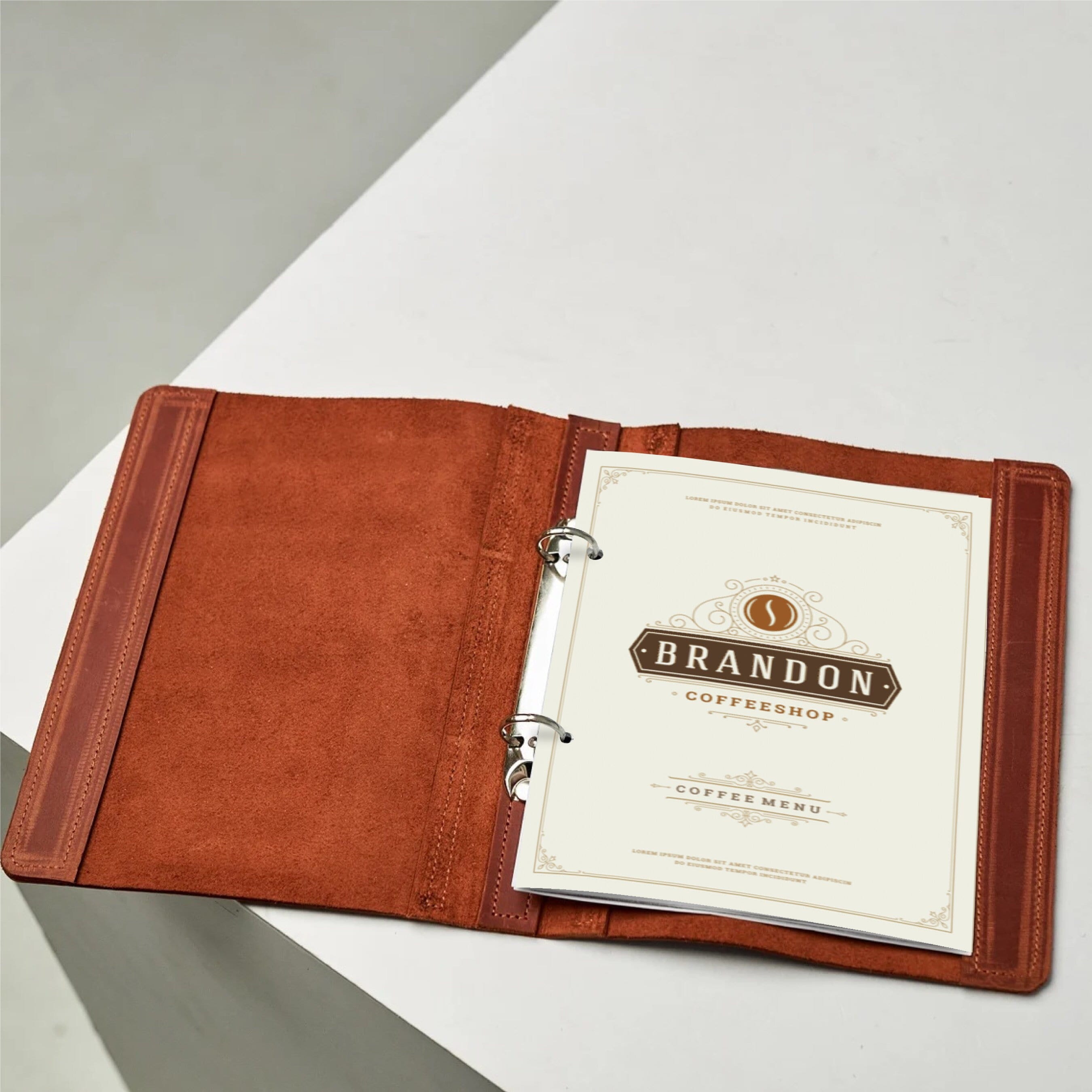
A menu card presentation where the menu pages (paper inserts) are housed in a holder made of PU leather (or genuine leather) — often with pockets, die-cut insert windows, binder rings or screws. The cover gives a premium feel; inside you may have removable pages.
Why it’s a strong choice in 2025-26:
- Premium tactile impression: guests perceive value and up-market brand.
- Flexibility: you can replace inserts rather than entire holder when menu changes.
- Excellent for fine dining restaurants, speciality cuisines, themed restaurants.
- Aligns with trend of “material quality matters” in printed menus.
Design & implementation tips:
- Choose PU leather or genuine leather (depending on budget) with quality stitching.
- Use metal corner protectors or edge-binding for durability in high traffic.
- Inside layout: clear sleeves or stitched pockets so pages can be updated.
- Make sure the inserts are finished (laminated or coated) to avoid wear.
- Branding: emboss or deboss logo on cover for subtle luxury effect.
- In Pune’s humid climate, ensure material resists moisture, is wipe-able and maintains look.
When to choose this type:
- For premium restaurants, hotels, chain outlets with brand-driven interiors.
- For restaurants where menu doesn’t change frequently (or where only inserts change).
- When you want the menu card to mirror the brand’s upscale positioning.
4. Spiral-Bound Menu


6
What it is:
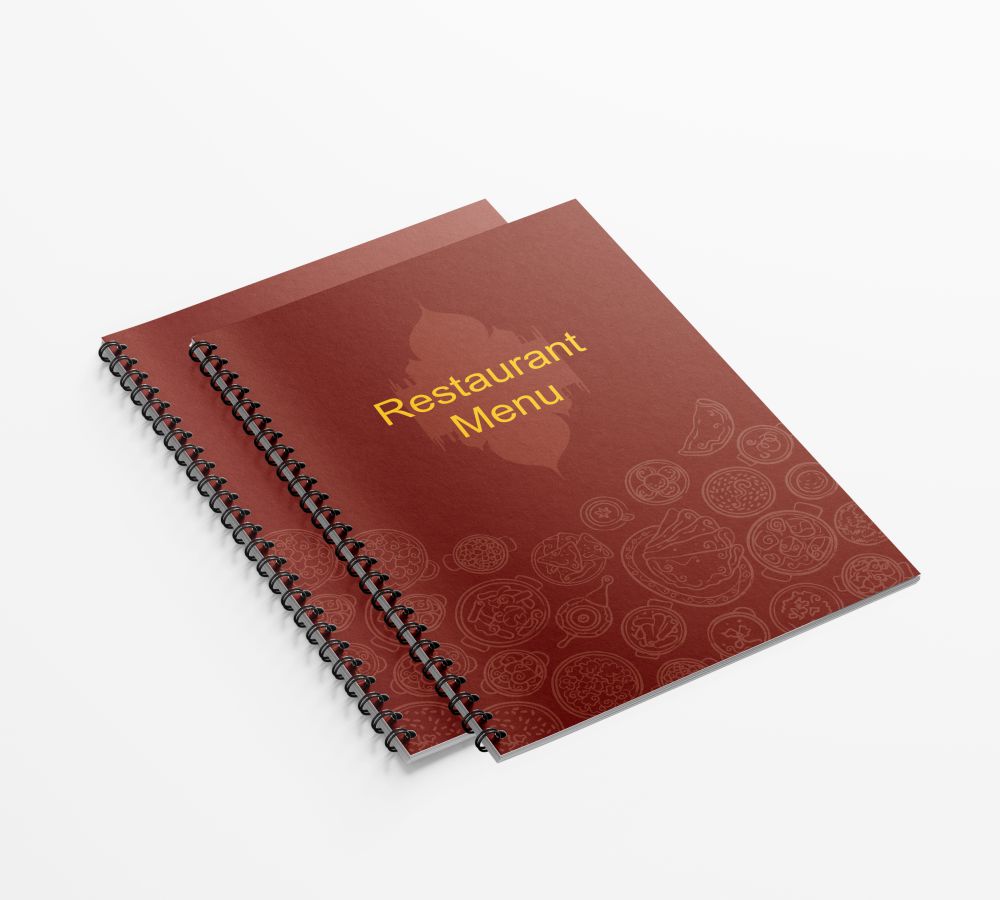
A menu card where pages are bound with a visible spiral wire (or plastic coil). It often lies flat when open — very convenient for guests — and can handle multiple pages (10-20 pages or more).
Why it’s in demand now:
- Flat-lay design: easier for diners to browse, compare items.
- Ideal for restaurants with large menus or multi-course menus (e.g., cafés with separate pages for breakfast, lunch, sides, desserts).
- Cost-effective compared to metal-bound or leather-bound, yet offers a robust feel.
- Aligns with trend of clear readable layout and usability.
Design & implementation tips:
- Choose durable paper stock (200-300 GSM), with optional lamination or UV coat for durability.
- Use contrasting spiral colour that aligns with brand (e.g., black, copper, brand colour).
- Consider using heavier cover (300-350 GSM cardstock) with soft-touch or textured finish.
- Ensure pages are numbered or tabbed for easier navigation.
- In Pune, given frequent menu changes (seasonal cuisines etc.), spiral binding allows cost-effective update: just print new pages and rebind if needed (or keep reuse cover and coil).
When to go for this type:
- For cafés, casual dining, restaurants with wide menu variety (drinks + food + desserts).
- When you anticipate seasonal or menu item rotations — easier to update than whole hardcover.
- When you want a neat, usable format without going full luxury.
5. Wooden Menu + QR Code Integration

6
What it is:
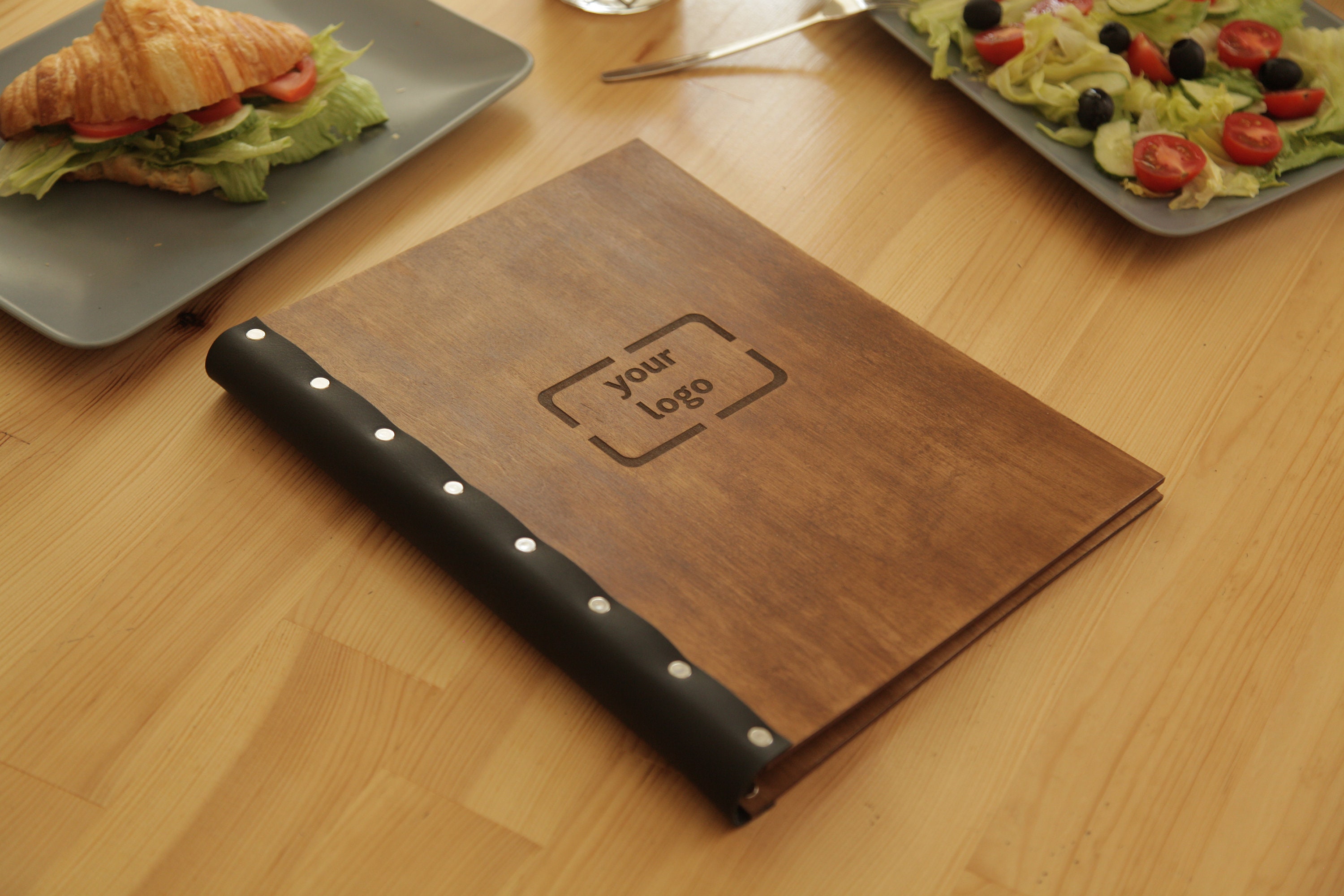
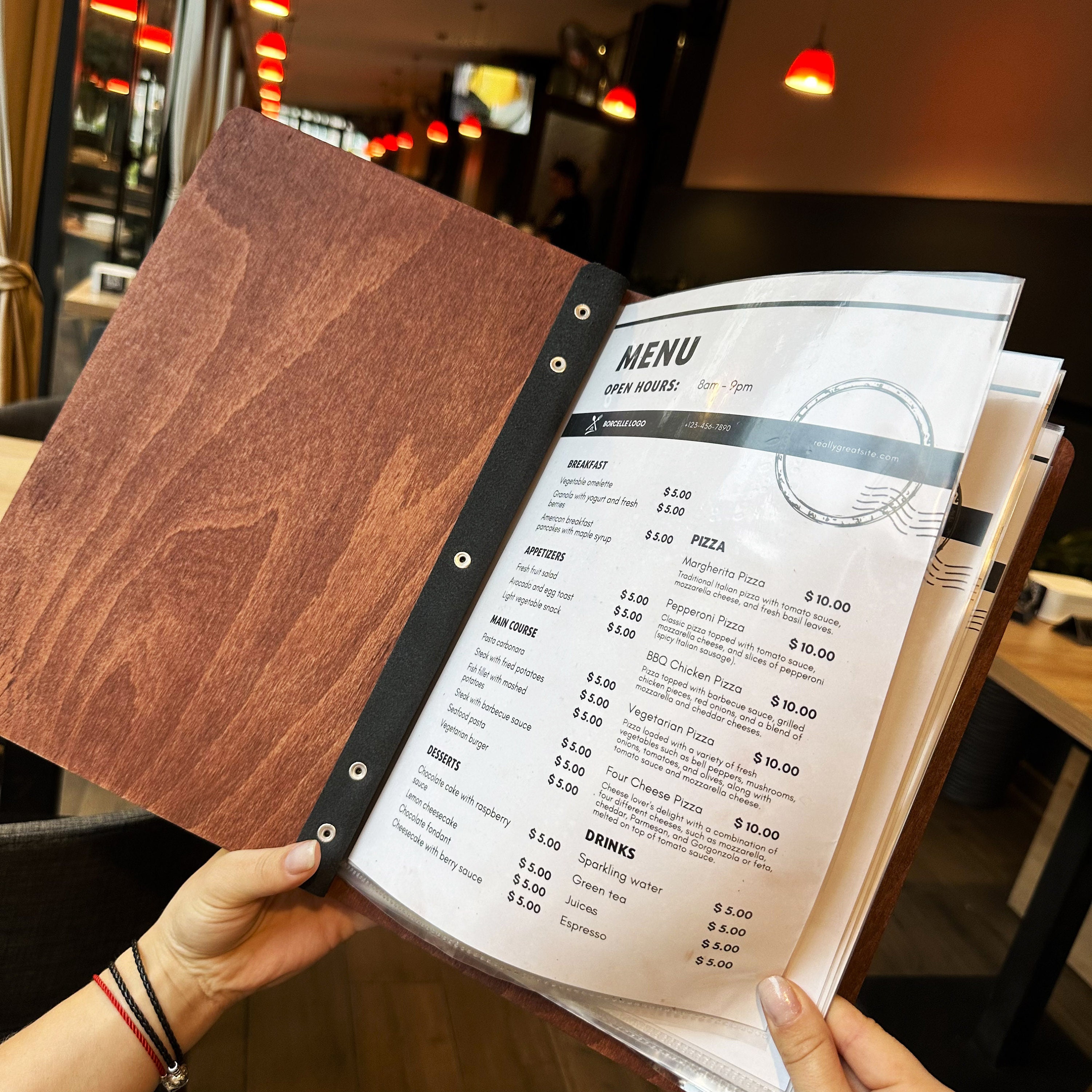
A menu card crafted from wood (ply, oak, bamboo, reclaimed wood) or wood-effect board, often featuring a printed menu surface or attached paper inserts, and crucially incorporating a QR code somewhere on the board (cover or last page) linking to an online/digital menu.
Why this is a trending hybrid format:
- Combines tactile, premium physical menu experience with digital interactivity (QR code).
- Especially relevant in 2025-26 as diners expect hygiene, contactless options, updates via QR. Trend reports note digital integration is key. restroworks.com+1
- Wooden materials reflect sustainability and natural textures — these aesthetics are in vogue.
- Gives restaurants flexibility: the printed card shows core menu, and QR code can link to specials, online ordering, or nutritional info.
Design & implementation tips:
- Select wood type (e.g., 12-15 mm thick ply, bamboo, or veneer) ensuring edges are sanded, corners rounded.
- Choose finish (natural matte, varnish, or light stain) that fits your interior vibe.
- Print menu directly on wood using UV flatbed printing, or attach a full-colour printed sheet.
- Reserve one corner or back for a well-designed QR code panel: ensure good scanning angle, placed upright when on table.
- The QR code leads to an online menu, specials, or ordering page. This hybrid design caters to both dine-in and tech-savvy customers.
- For Pune climate: ensure wood is sealed against moisture, avoids warping.
When this works best:
- For restaurants doing both dine-in and take-out/delivery, you can push online through QR.
- For themed restaurants, eco-focused cafés, or places with artisan decor.
- When you want to demonstrate a modern edge while retaining a luxury physical feel.
6. Takeaway Pocket Menu

6
What it is:
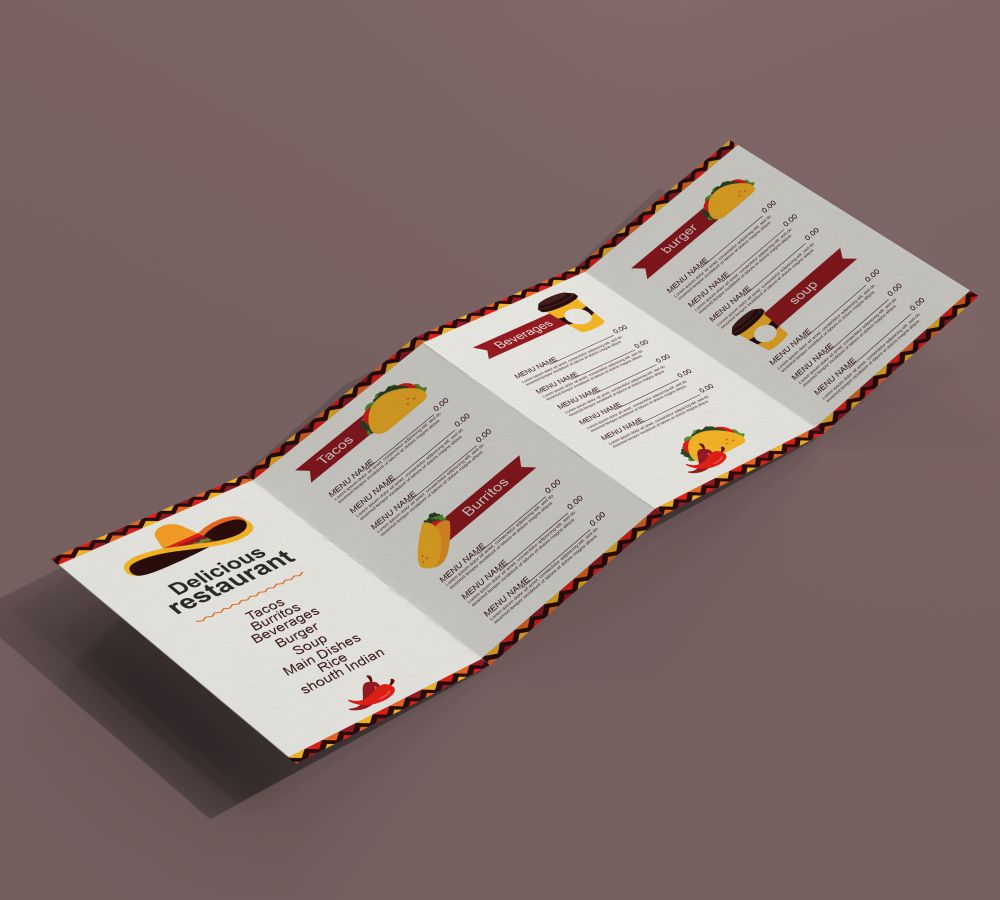
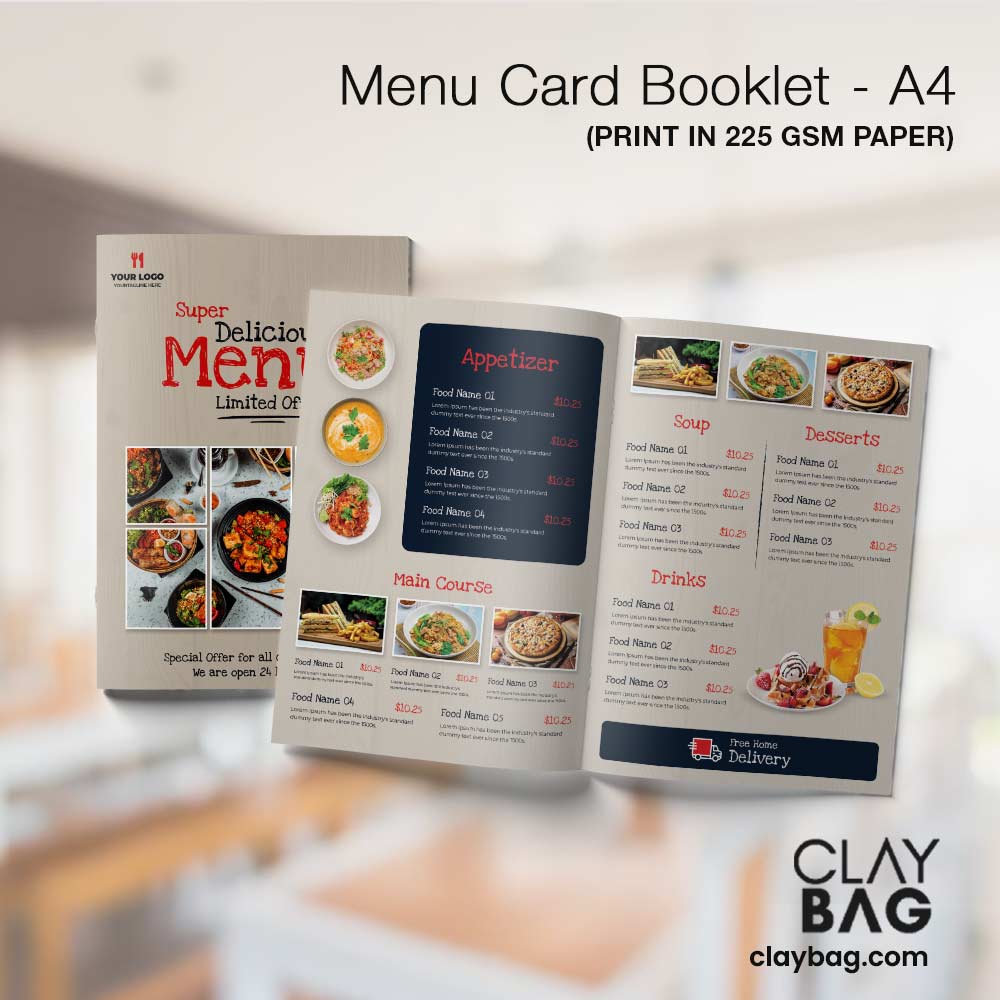
A compact, folded menu (or booklet) designed specifically for takeaway orders — often small size (A5 or DL), fits into bags/envelopes, sometimes with dedicated pockets to include coupons, loyalty cards or order slips.
Why it’s smart in 2025-26:
- With take-away and delivery continuing strong post-pandemic, a dedicated takeaway menu shows professionalism and supports branding outside the restaurant.
- Helps build repeat business: you can include a coupon, mention your app/QR code or upcoming promotion.
- Smaller size means lower cost printing and easy distribution (hand-outs, counters).
- Aligns with menu design trend of mobile/digital synergy (you can include QR codes linking to full digital menu). designerpeople
Design & implementation tips:
- Size: A5 (210 × 148 mm) or DL (210 × 99 mm) are common.
- Format: bi-fold or tri-fold. Use heavier cover paper (250-300 GSM) and good fold finishing.
- Inside: keep food list concise, highlight your bestsellers and special combos.
- Insert marketing panel: QR code for your online ordering app/website, social handles, loyalty scheme.
- Ensure brand colours, logo are clear; use high-impact food photography to catch attention.
- Wire or staple binding not needed — keeps cost low and easy for distribution.
When to deploy:
- For quick-service restaurants, takeaway counters, food trucks.
- For your “street-style burger” client example: very relevant.
- Anytime you want a low-cost, high-impact printed piece to reach outside dine-in.
7. Booklet Menu

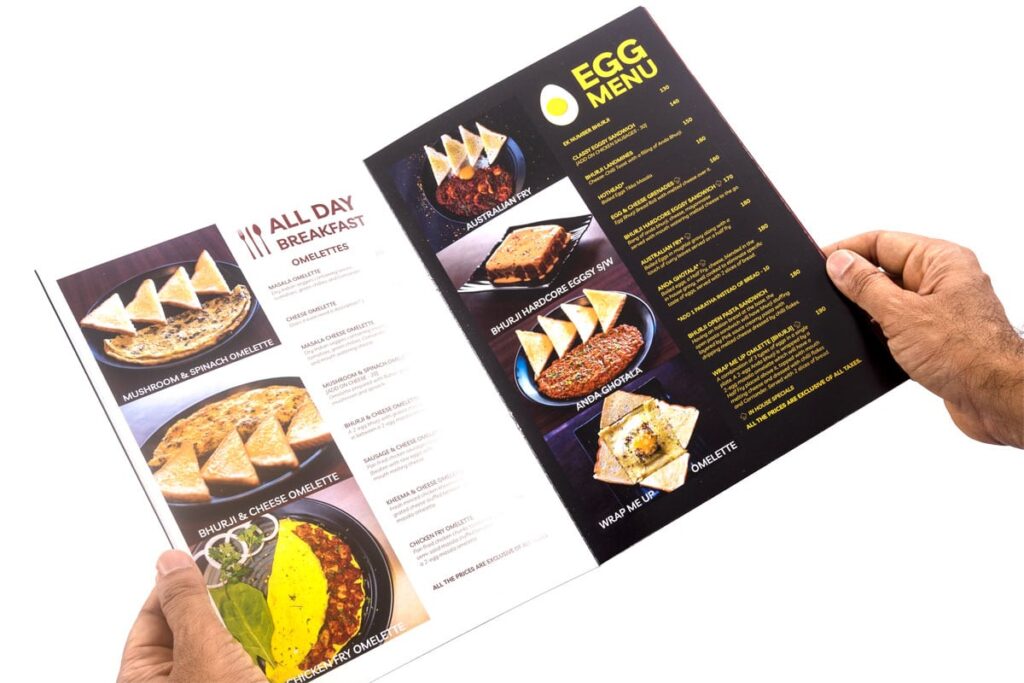
6
What it is:
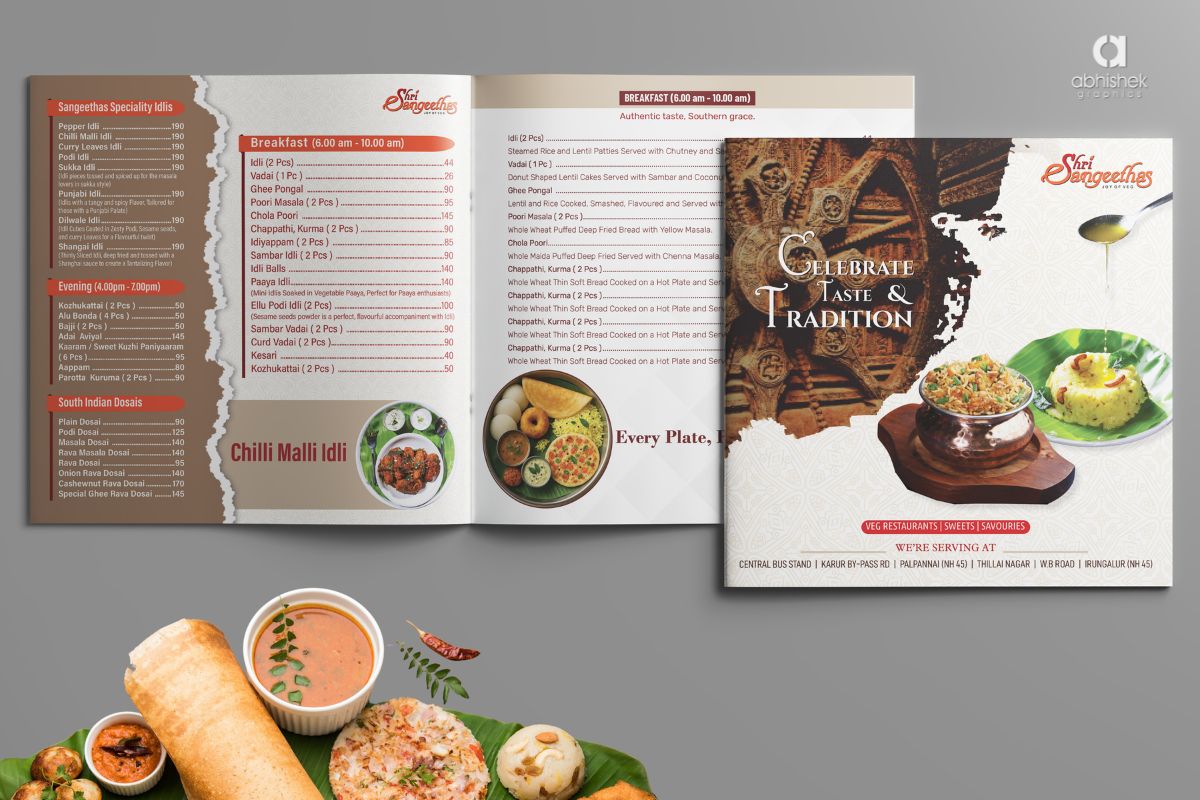
A multi-page booklet menu (e.g., 20–40 pages) bound like a magazine, often with heavy-cover, full-colour printing, high-quality paper, and sections for starters, mains, desserts, drinks, wine list, etc.
Why the trend suits 2025-26:
- For premium restaurants, multi-cuisine venues or large menus (including wine and beverages) this format offers space, sophistication.
- Guests perceive high value; the booklet format adds gravitas.
- Enables storytelling: you can include chef’s notes, origin stories, seasonal specials, wine pairings.
- Excellent for branding and upselling high margin items.
Design & implementation tips:
- Cover: 300-350 GSM board with lamination (matte or soft-touch).
- Inside: 170-200 GSM quality paper, high-resolution imagery, consistent section markers.
- Binding: either perfect bound (square spine) or saddle-stitched depending on page count.
- Typography: Use hierarchy — dish name, description, price, highlight signature dishes.
- Use “golden-triangle” placement theory (important items in top-right area) to influence orders. TouchBistro
- Include QR code on back cover for digital menu or app download.
- Ensure the booklet is updated at least annually or when major menu refresh occurs (so the investment pays off).
When to use this type:
- For upscale restaurants, hotels, resorts, fine-dining, themed destination venues.
- When you want the menu to act as a brand-touchpoint and reflect premium service.
- When you have stable menu pages (not every dish changes weekly) so recall value builds.
Bringing These Types to Life – How Aveera Design Solutions Can Help
At Aveera Design Solutions (based in Pune), we specialise in menu-card design and printing services that help your restaurant stand out. Here’s how we approach it:
- Consultation & Branding Alignment
- We start by understanding your restaurant’s brand, ambience, target customer, menu mix and budget.
- Choose the most suitable format (from the seven above) based on your positioning.
- Professional Design
- Layouts created by experienced designers (15+ years experience in your team) so that typography, imagery, colour palette and spacing all work together.
- We incorporate latest trends (digital integration, readable layout, highlight high-margin items) so your menu aligns with 2025-26 expectations.
designerpeople+1 - We optimise for print and digital (if menu also appears online or via QR code).
- Material & Production Expertise
- We advise on paper stocks, lamination, board materials (MDF, PU-leather, wood, etc) suitable for Pune’s climate.
- We handle printing, finishing, binding, lamination and assembly in local print-shops/hubs to maintain quality and timelines.
- Update & Maintenance
- We design with flexibility: e.g., in leather-holder format you can update inserts; in spiral binding you can re-print pages as needed.
- We provide source files so you can update minor changes (prices, items) in future without full redesign.
- SEO & Local Focus for Your Restaurant
- We help you include brand elements, consistent use of keywords (for example “menu card design Pune”) in the menu itself (for online uploads) so that when you upload photographs of your menu or promote online, you boost local search visibility.
SEO & Local Ranking – “Menu Card Design Service Pune”
Since you (as our blog reader) want to rank on Google for menu card design service Pune, here are some quick tips to help your own website or the restaurant’s website (or your agency’s site) rank better:
- Use the keyword “menu card design Pune” (and variants like “restaurant menu design Pune”, “menu card printing Pune”) in your page title, headings (H1, H2) and meta description.
- Localise your content: mention Pune (Sus, Kharadi, Kharadi Area, Pune City) so Google knows your service area.
- Create service pages that showcase each menu-card type (like above) with visuals, case studies, pricing examples.
- Add alt-text on images like “laminated paper menu card Pune restaurant”, “PU leather menu holder Pune fine dining”.
- Add structured data/schema for your business (LocalBusiness) including address, phone, service offered (menu design, printing) for local SEO.
- Blog regularly: this article is one example – publish one every quarter on latest design trends or case-studies (for example your burger shop client).
- Show real work: add a portfolio of menu cards you designed for restaurants in Pune, with testimonials and high-quality photographs.
- Mobile-friendly website: increasingly, designers and clients browsing from mobile and Google favours mobile-friendly sites.
- Fast load time: large print-design images can slow your site — optimise file sizes.
By following these steps, your website and services for menu-card design in Pune will get better visibility, strengthening your lead flow.
Why Now is the Time to Act
- Dining-in is rebounding in 2025, guests expect high-quality tactile experiences. The Restaurant HQ
- Many restaurants in Pune still have outdated, generic menu cards — updating your menu format gives you a competitive edge.
- A good menu card not only supports branding but can drive higher average spend (by strategic layout) and reflect quality. TouchBistro
- Once you’ve invested in a premium format (e.g., leather holder or wood menu + QR), you’ll save on frequent re-prints of generic versions and build brand recall.
- For your agency (Aveera), if you offer these seven menu-card types as packaged services (design + print + updates) you’ll attract restaurants across Pune looking to upgrade before the next season (2026) — so getting ahead now is smart.
Summary – Which Format for Which Use Case
| Menu Type | Best Suited For | Budget Tier | Update Frequency |
|---|---|---|---|
| Laminated Paper Menu | Casual cafés, QSR, street-style burgers | Low | High (frequent) |
| Hardboard/MDF Menu Card | Mid-premium dining, rustic/modern theme | Medium | Moderate |
| PU-Leather Holder Menu | Premium/fine dining, brand-focused | Medium-High | Low to moderate |
| Spiral-Bound Menu | Casual dining with larger menu variety | Medium | Moderate |
| Wooden Menu + QR Code | Hybrid dine-in/takeaway, eco/designer vibe | Medium-High | Moderate |
| Takeaway Pocket Menu | Take-away/delivery-focused outlets | Low | High (frequent) |
| Booklet Menu | Upscale dining, multi-section menus | High | Low |
Closing Thoughts
At Aveera Design Solutions, we recognise that menu card design is not just about printing — it’s about reinforcing your brand, improving guest experience, and driving business results. For restaurants in Pune looking ahead to 2025-26, choosing the right format matters.
Whether you pick a low-cost laminated menu for your quick-service outlet, or an elegant wood menu with integrated QR code for a full-service dining brand, what matters is alignment: material, design, function and the guest journey.
If you’re ready to upgrade your menu card, we’d be happy to help. From conceptual design, material selection, printing and delivery in Pune — we’ve got you covered.